













HEAR FROM OUR ENDURANCE ATHLETES

March 10th, 2010

Gear Up Now for the IronCare Splash & Dash

swimming_woman
Coming up fast is the annual Four Peaks Racing Ironcare Splash & Dash events. This USAT-sanctioned race is held on two dates at Tempe Town Lake in Arizona. Each race consists of a 1000 meter swim in the open water followed by a run of three kilometers.

This is a fun event, geared toward endurance athletes from beginning to professional. It’s a great way for the beginner to experience their first multisport event and perfect for the professional to get geared up for a future, bigger competition. According to Four Peaks Racing, Splash & Dash is a “unique training event with a relaxed atmosphere”.

The spring races will be held on the Saturdays of April 3rd and May 1st beginning at 7:30 a.m. Additionally, there are two Thursday night races scheduled for April 15th and May 13th which start at 6:00 p.m. The course begins at Tempe Town Lake’s Special Event Ramp, located on the north side between Mill Avenue and Rural Road. If the water temperature of the lake drops below 78 degree, wetsuits will be allowed.

Part of the proceeds from the event’s $30 or $40 registration fees (USAT members and nonmembers, respectively) will go toward The Gage Safer Streets Foundation. The foundation works toward promoting a positive image of cyclists. Their future goal is to distribute Public Service Announcements that educate motorists about sharing the road with cyclists.

To register, visit the Four Peaks Racing site and download a mail-in form or use the online form at Active.com. Registration on the day of the race is an additional $5.00. If you want to save $5 off the regular $30 or $40 fee, simply visit the IronCare Sports Facility in Scottsdale.

The weather in Tempe in April should be fabulous and the IronCare Splash & Dash is a great way to get your feet wet before competing in more rigorous events.

March 9th, 2010

Steve Donaldson and Team CARD Cycling

Steve Donaldson takes his cycling seriously. After suffering an injury to his hamstring during the 2004 Olympic trials that ended his track and field career, he had to find a way to rehabilitate team_CARD_cycling_Logo2his injured leg. Donaldson turned to cycling and he quickly became enamored of this new sport.

In response to his new passion, Donaldson founded Team CARD. Although this cycling club is based in Phoenix, Arizona, its members come from all parts of the United States. Membership in Team CARD is available to any elite endurance athlete who enjoys the sport of cycling. The team is strongly focused toward promoting women’s participation in the sport.

But Donaldson is concerned with more than just the fun and competition involved in cycling. He also founded Cyclists Against Reckless Drivers (CARD), a nonprofit organization that seeks to change legislation regarding bicycle laws in Arizona as well as instituting harsher penalties in the case of car/bicycle altercations. Too many accidents and injuries occur due to negligence on the part of drivers who refuse to share the road with cyclists. According to Donaldson’s website, only 14 states currently have laws on the books that protect riders through the three-foot law. The three-foot law refers to the distance that must be maintained by a vehicle and a bicycle on the roadway.

In addition to efforts that will change legislation, CARD also promotes education and training for cyclists and drivers alike in order to prevent future accidents.

We at Extreme Endurance applaud Donaldson’s concern for making the roads a safer place for cyclists and his efforts to bring more women into the sport of cycling. If you wish to become involved with Team CARD or Cyclists Against Reckless Drivers or just to make a donation, please visit his website.

March 4th, 2010

Tapering Off Training Levels Prior to Competition

The most successful endurance athletes use the concept of tapering to increase their performance levels during competition and there is scientific research to back this up. Various studies duathlon athleteperformed during the 1990s show that a gradual reduction in intensity, duration, and frequency in the weeks immediately preceding a competitive event has a very beneficial effect on performance.

Obviously it is necessary to intensely train in order to reach the top levels of any endurance sporting event. But take a cue from endurance athletes who have learned the hard way that a period of recovery is necessary for muscles and aerobic capacity to perform optimally; tapering is a vital part of the competitive athlete’s training routine. The key is reducing volume and frequency while maintaining or even increasing intensity.

A gradual decrease in volume is recommended for two weeks until a final lessening of zero is achieved in the two days prior to competition. Any more than 14 days and there is a negative effect on performance.

Intensity of training should increase slightly to make up for the volume decrease. This has found to be more beneficial than training in both low volume and low intensity during the taper period.

Finally, the frequency of training sessions should be reduced to approximately 30% of the previous levels and no less. The athlete’s body needs to feel and “remember” the activity it is being trained to perform.

Using the results of prior research, it is estimated that a 3% improvement in performance can be expected when using these guidelines to taper training before competition. According to the Fitness Black Book an “interval group doubled their endurance capacity” in two weeks with interval training.

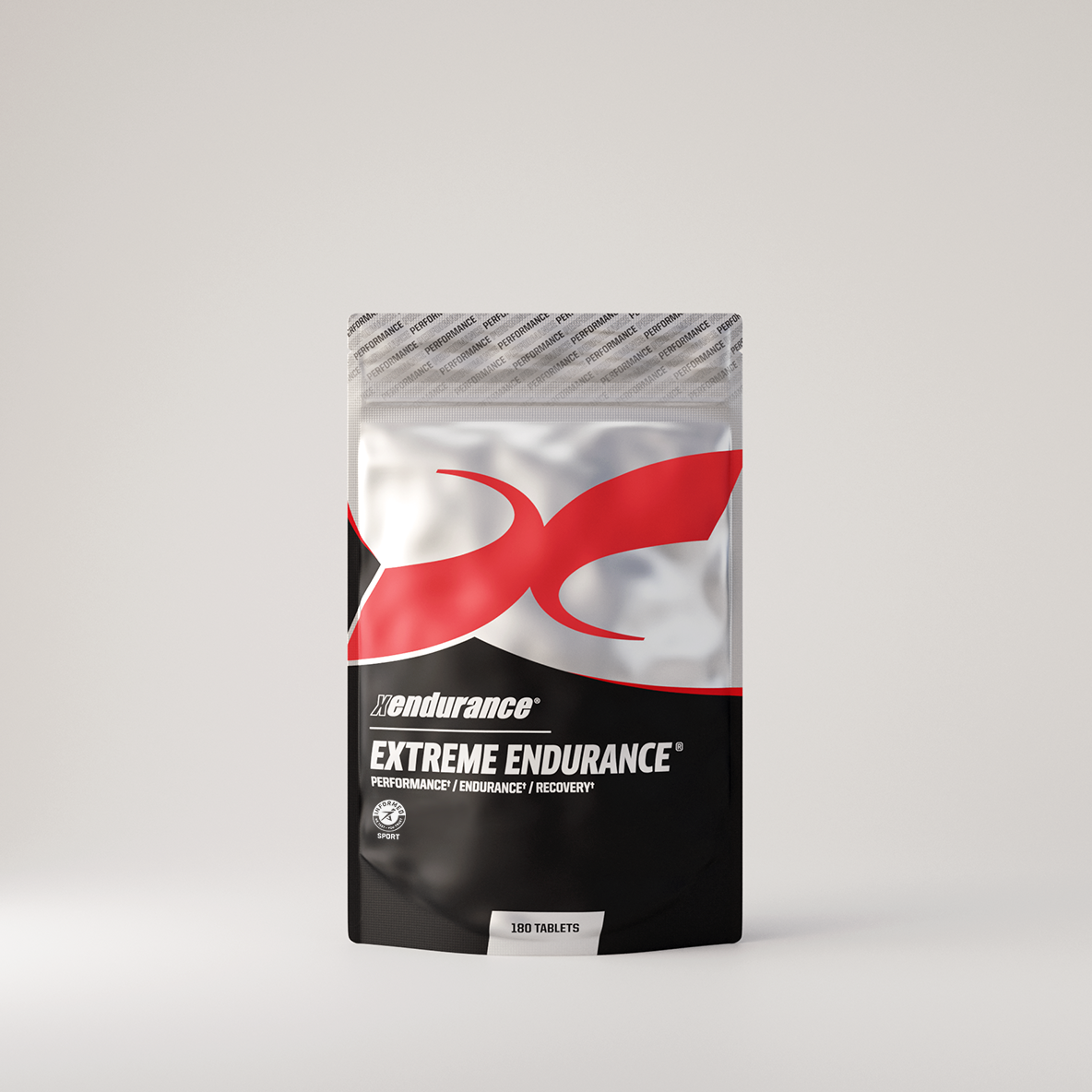
Used in conjunction with a dietary, drug free supplement such as Extreme Endurance, this presents an opportunity to perform at the body’s optimum capacity.

March 1st, 2010

Even Endurance Athletes Count Calories

Most people conceptualize endurance athletes as being a part of the general population that has no need to restrict their caloric intake. After all, they reason, these elite runners, swimmers, and triathlete competitincyclists burn through calories to the point where they need excesses of the normal RDA to fuel their bodies.

The reality is far different from this common misconception. According to a study of endurance athletes performed in 2009 and published by The Annals of Behavioral Medicine, a whopping 74% of them reported that they were “concerned” about their weight while 54% claimed to be “dissatisfied”.

While these results may be surprising to the average person, endurance athletes know that excess weight and body fat are the enemies when it comes to performance. In fact, aerobic capacity is at its optimum only when the body carries the lowest percentage of fat. This is due to muscles experiencing decreased competition from fat tissue for the precious fuel and oxygen supplied during extreme activity levels. Even an added five percent of overall body weight makes a difference; it can result in a correlating five percent decrease in performance. The more pounds a runner carries, for instance, the harder he or she must work to achieve the same speed as others of lower weight.

This does not mean that an endurance athlete should go on a diet; rather they should think about their caloric intake differently. A diet of lean proteins in low percentage, grains, fruits, and vegetables is vital for providing the body with necessary fuel while decreasing the amount of fat. As ETF Wellness Corp. states in their blog Pre and Post Workout Nutrition, “endurance athletes…whose primary concerns do not include increasing muscle mass” should be more concerned with protein ratio.

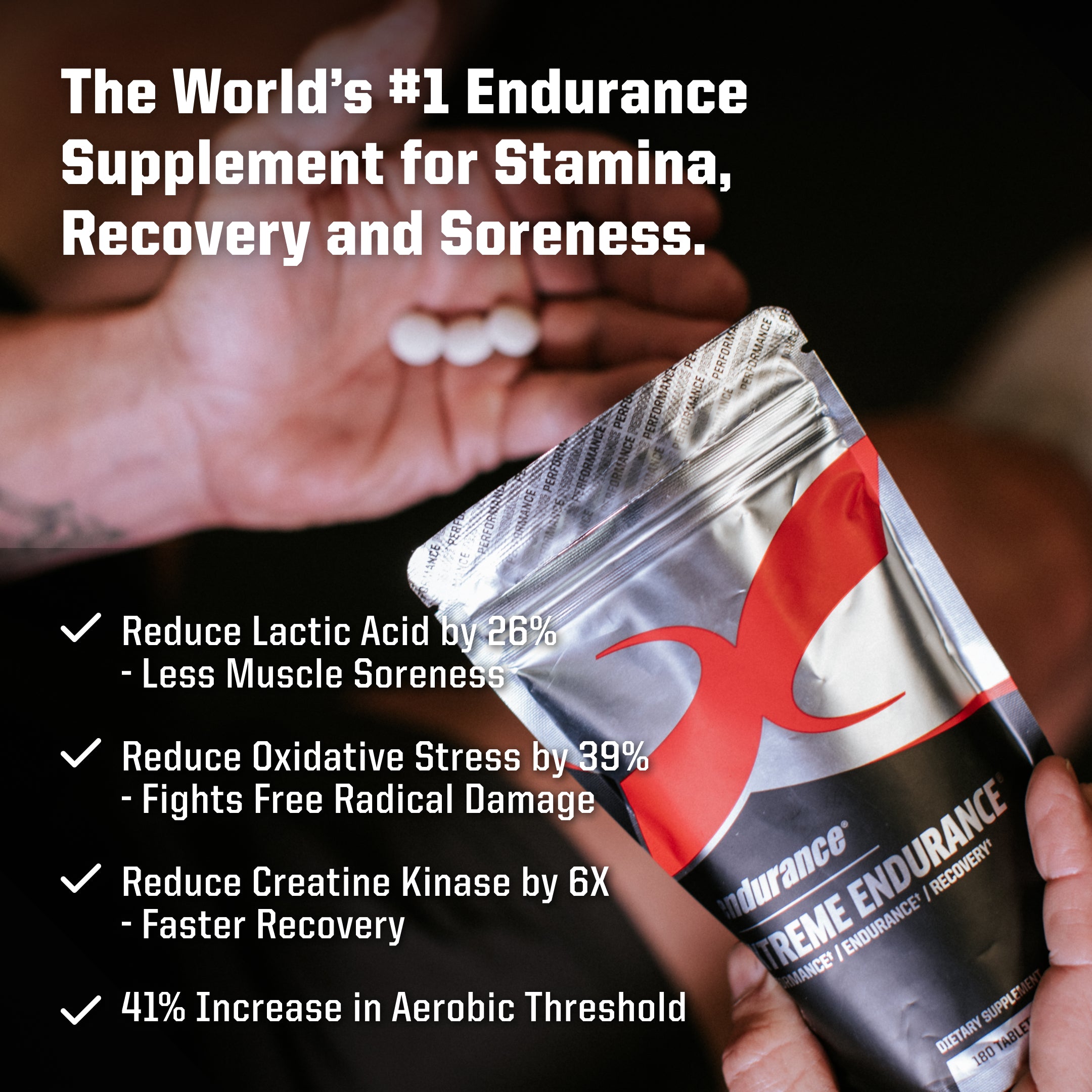
This is where the Extreme Endurance dietary supplement comes into play. By providing natural ingredients that help to prevent the buildup of acid during extreme activity, it works with a lean, mean body to increase performance. So just as food is fuel for the body, this drug free supplement is a fuel additive that helps diet work optimally.

February 25th, 2010

Born to Run

A recent study performed by researchers at the Wingate Institute and published by the American Physiological Society entitled “Interaction between SNPs in the NRF2 gene and elite enduranceIntDuaLanzarotesmall performance” has revealed an exciting new discovery. Apparently elite endurance athletes who have a variation of a particular gene makes them ‘born to run’.

The research identified a difference between endurance athletes and sprinters. Regardless of the competitive level, in all cases those athletes who excelled in endurance sports were found to have one of two particular variants of the NRF2 gene. So far, there is no cause and effect relationship established but the research into the human genome is ongoing. It is the hope that eventually the role of this gene variant in athletic performance will be revealed.

The NRF2 was identified as one of the factors influencing athletic endurance because it plays a role in the production of new mitochondria. Mitochondria are the cells that produce energy. NRF2 also has a positive reverse effect on inflammation and oxidation that occur during intense exercise, much the same as Extreme Endurance.

The exact variations of this gene are called the NRF2 A allele and NRF2 C/T genotype. In some elite athletes, both variations were found. Research was performed on 155 track and field competitors and arranged by endurance and sprint specialties and further categorized as ‘elite’ (as defined by international or Olympic performances) and ‘non-elite’. These results were compared to a control group of 240 people who were not involved in sports.

This research opens the door to new possibilities in the field of understanding the reasons behind why some athletes are able to reach the top of their fields while others perform nominally. You can bet that the makers of Extreme Endurance will be closely following subsequent studies and using the information to benefit endurance athletes with their drug free supplement.

  • RSS